The Closure of Hormuz: The First Major Test of the Switzerland Agreement
Iran's closure of the Strait of Hormuz and continued Israeli operations against Hezbollah in Lebanon are placing the Switzerland Agreement under unprecedented strain, linking regional conflict to global energy security.
SAGE Strategic Intelligence Brief #002
The Closure of Hormuz: The First Major Test of the Switzerland Agreement
22 June 2026
SAGE International Australia
Author: Dr John Bruni
Suggested Citation
SAGE International Australia. (2026). The Closure of Hormuz: The First Major Test of the Switzerland Agreement (SAGE Strategic Intelligence Brief No. 002). Adelaide: SAGE International Australia
Executive Summary
The Switzerland Agreement has entered its most dangerous phase.
What began as a framework designed to de-escalate direct confrontation between the United States and Iran is now under significant pressure from developments beyond the immediate negotiating process.
Since the agreement was announced, Israeli military operations against Hezbollah targets in southern Lebanon and the southern suburbs of Beirut have continued. Tehran increasingly views these operations as evidence that Washington either cannot or will not restrain Israel.
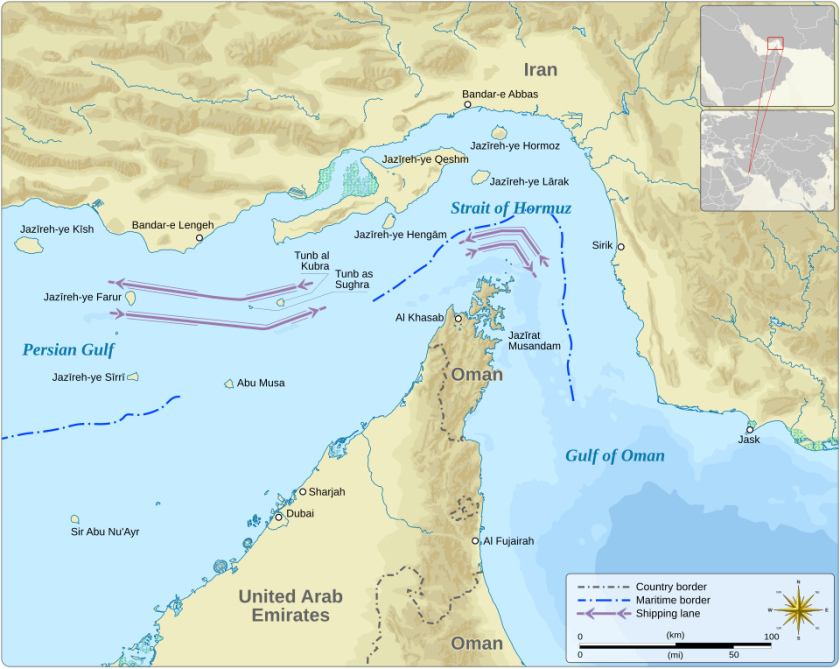
In response, Iran has declared the Strait of Hormuz closed, citing ceasefire violations and continued military pressure on Hezbollah. Whether the closure is fully enforceable is almost secondary to its strategic effect. Shipping companies, insurers and energy markets are already responding to increased uncertainty.
The central issue is no longer simply whether the Switzerland Agreement can prevent direct US-Iran confrontation. The central issue is whether the agreement can survive the growing linkage between Hezbollah, Israel, Hormuz and the global energy system. For the first time since the agreement was signed, local military developments in Lebanon now carry the potential to affect global maritime trade, energy security and economic stability.
The Switzerland Agreement remains in force. Its future, however, may depend less on events in Washington or Tehran and more on developments in southern Lebanon.
Key Judgements
• The Switzerland Agreement has entered its first major strategic stress test.
• Continued Israeli military operations against Hezbollah are undermining Iranian confidence in the agreement.
• Tehran increasingly appears sceptical of Washington’s ability to act as an effective and impartial broker.
• Iran has linked developments in Lebanon with the future status of the Strait of Hormuz.
• The declaration that Hormuz is closed represents a significant escalation in strategic signalling.
• Qatar and Pakistan have become critical intermediaries helping to preserve diplomatic channels.
• The greatest danger is not immediate military escalation but a progressive collapse of trust.
• A breakdown of confidence could produce renewed disruption to maritime trade, energy markets and regional stability.
Background
The Switzerland Agreement emerged from a shared desire to halt the cycle of escalation that had brought the United States and Iran dangerously close to direct military confrontation.
The agreement sought to:
• reduce the risk of regional war;
• restore confidence in Gulf maritime security;
• stabilise global energy markets;
• create conditions for further diplomatic engagement;
• establish a pathway for addressing broader strategic disputes.
Initially, the framework appeared successful. Tensions eased. Direct military confrontation receded. Energy markets stabilised.
However, the agreement left a number of critical regional issues unresolved. Foremost among them was the future role of Iranian-aligned non-state actors, particularly Hezbollah. The assumption underlying the agreement was that these issues could be managed separately from the broader US-Iran relationship.
Recent events suggest that assumption may have been flawed.
Assessment
The Lebanon Problem
Lebanon has become the principal fault line within the Switzerland framework. From Israel’s perspective, continued military pressure on Hezbollah is a national security requirement. Israeli leaders remain determined to prevent Hezbollah from rebuilding military capabilities that could threaten northern Israel. For Iran, however, Hezbollah is far more than a Lebanese organisation. It forms a central component of Tehran’s regional deterrence architecture.
For decades, Hezbollah has provided Iran with strategic depth, influence and an indirect means of deterring Israeli military action. Consequently, continued Israeli operations against Hezbollah are increasingly viewed in Tehran not as isolated tactical actions but as attacks against Iranian strategic interests.
This creates a fundamental contradiction within the Switzerland Agreement. Iran may be willing to avoid direct confrontation with the United States. It is far less likely to accept a situation in which its most important regional partner continues to face sustained military pressure while Tehran exercises restraint.
As this perception deepens, confidence in the agreement weakens.
Israel and the Limits of American Influence
The Switzerland framework implicitly assumed that Washington possessed sufficient influence over regional actors to maintain strategic stability.
Events since the agreement suggest otherwise.
The Trump administration seeks regional de-escalation, economic stability and the uninterrupted flow of global commerce.
Israel seeks to degrade Hezbollah and preserve freedom of military action.
While these objectives overlap, they are not identical.
This divergence has become increasingly apparent.
Tehran now appears to judge American credibility less by presidential statements and more by developments on the ground.
President Trump may publicly criticise Israeli actions.
However, if military operations continue unabated, Iranian decision-makers are unlikely to view such criticism as meaningful restraint.
The result is a growing credibility problem.
Iran increasingly appears unconvinced that Washington can deliver on broader regional understandings if it cannot influence Israeli behaviour in Lebanon.
The Lebanon–Hormuz Linkage
The most important development since the signing of the Switzerland Agreement is Iran’s apparent decision to link developments in Lebanon directly with the future status of the Strait of Hormuz.
This represents a fundamental shift in the strategic environment.
The Switzerland framework was built upon the assumption that maritime security, nuclear diplomacy and the Israel-Hezbollah conflict could be treated as separate policy tracks. Iran increasingly appears to reject that assumption. From Tehran’s perspective, continued Israeli operations against Hezbollah undermine the broader logic of regional de-escalation.
The message emerging from Iranian statements is clear:
If Hezbollah remains under sustained military pressure, Iran sees little reason to provide the stability required for the normal operation of the Strait of Hormuz. The declaration that Hormuz is closed, therefore, carries significance far beyond maritime operations. It represents an attempt to link local military developments in Lebanon with one of the world’s most important energy corridors.
Importantly, Iran does not need to physically prevent every vessel from transiting the Strait in order to generate strategic effects. Commercial shipping operates on confidence. Insurance markets operate on confidence. Energy markets operate on confidence. If confidence collapses, economic disruption can occur long before a complete maritime blockade becomes reality.
This is precisely why the declaration matters.
Whether Hormuz is fully closed, partially closed, or merely perceived to be at risk, the economic consequences can still be substantial.
The Lebanon issue has therefore evolved into a global energy security issue.
What is occurring in southern Lebanon now carries implications for energy prices, shipping costs, supply chains, and economic confidence worldwide.
The Role of Qatar and Pakistan
As confidence between Tehran and Washington deteriorates, third-party mediation has become increasingly important.
Among the various diplomatic actors involved, Qatar and Pakistan have emerged as particularly significant. Both maintain relationships across multiple regional power centres and retain sufficient credibility to facilitate dialogue between otherwise hostile parties. Their role extends beyond simple communication. They serve as confidence-building intermediaries.
For Tehran, assurances delivered through Doha or Islamabad may carry greater credibility than direct American statements. This function has become increasingly important as distrust grows. Without Qatari and Pakistani mediation, the Switzerland framework would face significantly greater strain.
Their continued engagement may be one of the principal reasons the agreement remains intact.
The Sceptical Case
The Switzerland Agreement may ultimately fail because the principal actors define restraint differently. For Washington, restraint means avoiding direct US-Iran conflict while preserving global economic stability. For Israel, restraint means maintaining military freedom of action while avoiding wider regional war. For Iran, restraint increasingly appears to require protection of Hezbollah and recognition of Tehran’s regional interests.
These competing definitions cannot coexist indefinitely.
If expectations remain unresolved, the agreement risks gradual erosion. Trust may collapse long before formal diplomacy ends.
The Optimistic Case
Despite mounting tensions, the agreement remains operational.
None of the principal actors appears eager to return to unrestricted confrontation. The United States seeks stability. Iran remains under economic pressure and benefits from avoiding direct war. Israel continues to face genuine security concerns, but also has strong incentives to avoid wider regional escalation.
Meanwhile, Qatar and Pakistan continue to facilitate communication.
This creates opportunities for a more sustainable stabilisation framework involving:
• clearer understandings regarding military activity in Lebanon;
• enhanced deconfliction arrangements;
• restoration of confidence in maritime security;
• continued third-party mediation;
• mechanisms for distinguishing tactical incidents from deliberate escalation.
Such arrangements would not constitute peace.
However, they may prevent renewed regional conflict.
Implications for Australia
Australia remains geographically distant from the crisis but economically exposed to its consequences.
Any prolonged disruption involving the Strait of Hormuz could affect:
• global energy prices;
• shipping costs;
• inflationary pressures;
• supply chain reliability;
• broader economic confidence.
The crisis reinforces an important strategic lesson. Energy security, maritime security and national resilience are increasingly interconnected. Events in southern Lebanon can ultimately affect economic conditions in Australia. That reality highlights the growing importance of resilience planning and strategic foresight for middle powers operating in an increasingly interconnected world.
The SAGE Assessment
The Switzerland Agreement remains a de-escalation mechanism rather than a peace settlement.
Its greatest weakness is that it seeks to stabilise relations between Washington and Tehran while leaving unresolved the future of the Israel-Hezbollah conflict and the wider regional deterrence architecture. Iran has now linked developments in Lebanon with the future status of the Strait of Hormuz and has declared the waterway closed pending changes in regional conditions.
Whether that closure proves fully enforceable is not the most important issue.
The declaration itself is already producing strategic effects. The central question is no longer whether the agreement can survive tensions between Washington and Tehran. The central question is whether it can survive the linkage between Hezbollah, Israel and the global energy system.
If Lebanon remains unstable, Hormuz is unlikely to remain insulated. In that sense, southern Lebanon has become one of the world’s most important energy-security flashpoints. The Switzerland Agreement may survive military pressure. Its long-term viability will depend upon whether it can survive a growing crisis of trust.
At present, that trust appears increasingly fragile.
Disclaimer
SAGE Strategic Intelligence Briefs are produced independently and are intended to support informed discussion of geopolitical, defence, security and economic developments. Assessments reflect information available at the time of publication and may change as new information emerges.
About SAGE International Australia
SAGE International Australia is an independent strategic research and analysis organisation specialising in geopolitics, defence, national security, economic resilience and strategic foresight.
Through objective, evidence-based and non-partisan analysis, SAGE helps decision-makers understand risk, identify opportunity and prepare for future challenges.
For more information, visit: