The Switzerland Agreement – Ceasefire or Strategic Pause?
SAGE Strategic INTELLIGENCE BRIEF #001
The Switzerland Agreement: Ceasefire or Strategic Pause?
18 June 2026
SAGE International Australia
Author
Dr John Bruni
Suggested Citation
SAGE International Australia. (2026). The Switzerland Agreement: Ceasefire or Strategic Pause? (SAGE Strategic Intelligence Brief No. 001). Adelaide: SAGE International Australia.
Executive Summary
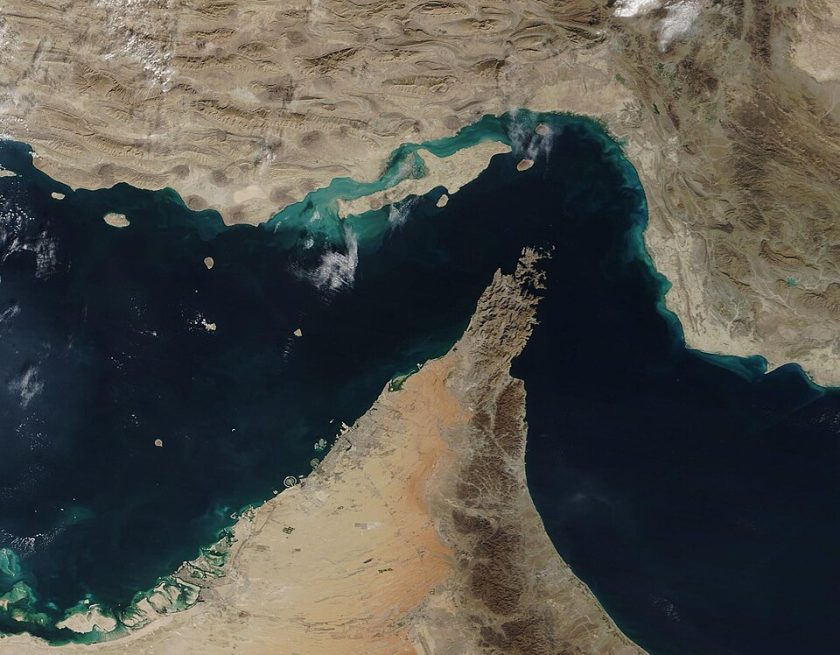
The proposed agreement between the United States and Iran, expected to be formally signed in Switzerland, represents a significant de-escalation in a conflict that threatened regional stability and global energy markets. The reopening of the Strait of Hormuz and the cessation of active hostilities have been welcomed by governments, industry and financial markets alike.
However, while the agreement may reduce the immediate risk of conflict, it does not resolve the underlying strategic disputes that contributed to the crisis. Questions surrounding Iran’s nuclear program, sanctions relief, regional proxy networks and Israel’s security concerns remain unresolved.
The agreement should therefore be viewed less as a definitive peace settlement and more as a potential strategic pause whose durability will depend upon the willingness of all parties to sustain it.
Key Judgements
• The agreement reduces immediate risks to global energy markets and maritime trade.
• Neither Washington nor Tehran achieved a decisive military outcome, creating incentives for both sides to accept a negotiated settlement.
• Significant strategic disagreements remain unresolved.
• Verification and compliance mechanisms will be critical to the agreement’s long-term viability.
• The conflict reinforces broader lessons about the changing character of warfare and the growing effectiveness of asymmetric military capabilities.
Background
Available reporting indicates that the agreement includes an end to active US-Iran hostilities, the reopening of the Strait of Hormuz, and the commencement of further negotiations concerning sanctions relief and Iran’s nuclear program.
The agreement reportedly emerged following mediation efforts involving Pakistan and indirect engagement by Gulf actors seeking to restore regional stability and secure maritime trade routes.
Financial markets responded positively to the announcement, reflecting expectations of reduced energy market disruption and lower shipping risk.
Assessment
The Optimistic Case
The agreement offers potential benefits to all major stakeholders.
For the United States, it provides an opportunity to demonstrate successful crisis management while reducing the risk of a prolonged regional conflict.
For Iran, it offers regime survival and the possibility of future economic relief through negotiations over sanctions.
For Gulf states, the reopening of the Strait of Hormuz restores confidence in one of the world’s most important maritime trade corridors.
For Europe and energy-importing economies, reduced disruption lowers immediate risks to energy supply chains and inflationary pressures.
Historically, agreements in which no party secures all of its objectives often prove more durable than settlements perceived as outright victories by one side.
The Sceptical Case
Despite the positive initial reaction, substantial challenges remain.
The most critical distinction is between a ceasefire and a peace settlement.
A ceasefire suspends violence.
A peace settlement resolves the underlying causes of conflict.
Several major points of contention remain unresolved, including:
• Iran’s nuclear ambitions.
• The future of US sanctions.
• The role of Iranian-aligned regional actors.
• Israel’s security concerns.
• Ongoing competition for regional influence.
As a result, the agreement may reduce tensions without eliminating the strategic rivalry that generated the conflict.
Israel as a Strategic Variable
One of the most significant unanswered questions concerns the extent to which Washington and Jerusalem share identical strategic objectives.
The United States appears primarily focused on restoring regional stability and ensuring freedom of navigation through the Strait of Hormuz.
Israel’s strategic priorities may remain focused on preventing any future recovery of Iranian military capabilities and degrading Iran’s regional network of partners and proxies.
These objectives are not necessarily incompatible, but they are not identical either.
Future divergences between Washington and Jerusalem could emerge as an important factor affecting the agreement’s durability.
Verification and Compliance
Any agreement involving sanctions relief, nuclear limitations and proxy activity will require robust verification mechanisms.
Given the low levels of trust between the principal actors, implementation, and monitoring will likely prove as essential as the agreement itself.
The history of arms control and regional security agreements demonstrates that verification frequently becomes the decisive factor determining long-term success or failure.
The Broader Strategic Lesson
Beyond the immediate crisis, the conflict highlights a significant evolution in contemporary warfare.
Despite facing a materially stronger coalition, Iran demonstrated an ability to impose meaningful costs through the use of drones, missile forces, proxy networks, maritime disruption and economic pressure.
The conflict reinforces a growing international debate regarding the relationship between conventional military superiority and asymmetric capabilities.
For policymakers in Washington, Beijing, Moscow and New Delhi, the lessons of the conflict are likely to be studied carefully.
Military power increasingly depends not only on the ability to project force, but also on the capacity to absorb punishment, sustain pressure and impose costs over time.
Implications for Australia
Although geographically distant from the Strait of Hormuz, Australia remains vulnerable to disruptions affecting global energy markets, maritime trade routes and international supply chains.
The conflict highlights several enduring strategic realities:
• Energy security remains a national security issue.
• Maritime choke points continue to shape global commerce.
• Supply chain resilience is increasingly important.
• National resilience requires preparation for external shocks.
The crisis serves as a reminder that distant conflicts can produce direct economic and strategic consequences for Australia.
The SAGE Assessment
The Switzerland Agreement is best understood as a de-escalation mechanism rather than a comprehensive peace settlement.
It reduces immediate risks to regional stability and global energy markets while creating space for further negotiations.
However, the strategic competition between the United States and Iran remains unresolved.
The agreement’s long-term success will depend less on what is signed in Switzerland than on whether the parties continue to view restraint as preferable to renewed confrontation.
The war may be ending.
The strategic rivalry that produced it remains very much alive.
Disclaimer
SAGE Strategic Intelligence Briefs are produced independently and are intended to support informed discussion of geopolitical, defence, security and economic developments. Assessments reflect information available at the time of publication and may change as new information emerges.
About SAGE International Australia
SAGE International Australia is an independent strategic research and analysis organisation focused on geopolitics, defence, national security, economic resilience and strategic foresight.
Through objective, evidence-based and non-partisan analysis, SAGE helps decision-makers understand risk, identify opportunity and prepare for future challenges.
For more information, visit:
www.sageinternational.com.au