
Before the Crisis: How Threshold Conditioning Reshapes Strategic Risk
Writing for ITT Nexus, SAGE International’s Dr John Bruni examines how repeated pressure can narrow the choices available to governments and businesses.

Writing for ITT Nexus, SAGE International’s Dr John Bruni examines how repeated pressure can narrow the choices available to governments and businesses.
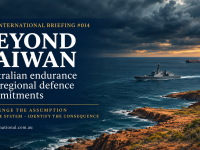
Could Australia protect its own territory, sustain US operations and assist the Philippines during a Taiwan crisis? SIB #014 examines the competing demands—and the choices Canberra should prepare for before a crisis forces its hand.
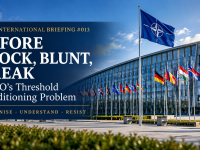
Can NATO defeat an adversary that undermines its defences before conventional war begins? SAGE Strategic Intelligence Brief No. 013 examines General Alexus Grynkewich’s Block, Blunt, Break Theory of Victory and introduces the Threshold Conditioning Assessment Mechanism (TCAM™). Designed to work through NATO’s existing institutions, TCAM offers a practical framework to recognise, understand and resist cumulative strategic threats, including hybrid warfare, AI-enabled disruption and vulnerabilities in critical commercial technologies.

How can Australia make better use of the force it already has? SAGE Strategic Intelligence Brief #012 examines lessons from Rhodesian Fire Force to propose sovereign mobile defence—an Australian conventional doctrine built around joint integration, domestic sustainment and resilience against Chinese Threshold Conditioning, within forecast defence budgets.

America’s military superiority depends on its ability to sustain global commitments. SIB 011 examines how strategic overextension and defence industrial constraints can enable Threshold Conditioning, weaken allied readiness and increase pressure on Washington—and why Australia must strengthen sovereign capability, diversify supply and build greater strategic resilience.
Sir Lawrence Freedman joins Dr John Bruni to discuss modern strategy, Iran, NATO, escalation and the relationship between political aims and military force.
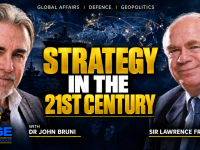
Sir Lawrence Freedman joins Dr John Bruni to discuss modern strategy, Iran, NATO, escalation and the relationship between political aims and military force.
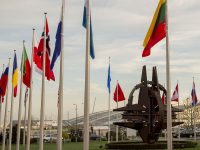
Russia is exploiting the space between NATO consultation and collective defence. SIB #010 examines how Threshold Conditioning can normalise cumulative hostile activity—and proposes Threshold Deterrence as a mechanism for imposing progressively greater collective costs without sacrificing escalation control.
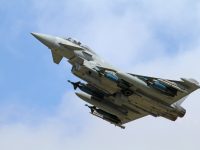
SIB #009 examines how Russia–NATO competition is moving from cyberattacks, sabotage and electronic interference toward armed interception and the defence of critical infrastructure. Using the Lithuania drone incident and undersea activity near Svalbard as case studies, the brief assesses how Threshold Conditioning may gradually erode the practical boundaries of Article 5 without triggering conventional war.
Could Russia and NATO stumble into war? Karl-Heinz Kamp joins John Bruni to examine hybrid warfare, European defence, deterrence and SAGE’s concept of threshold conditioning.
Tell us what you’re weighing up and when you need to act. We’ll discuss how a briefing, advisory session, written assessment or ongoing intelligence support could help your team decide its next move.
Discuss your requirements