
Ukraine War: Attrition, Drones and the Rising Cost of Putin’s Strategy
The war in Ukraine has entered a new phase. As drone warfare, long-range strikes and economic attrition increasingly shape the conflict, this Strategic Intelligence Brief examines the evolving military, political and economic pressures influencing both Russia's war effort and Ukraine's long-term resilience.
SAGE Strategic Intelligence Brief #003
Ukraine War: Attrition, Drones and the Rising Cost of Putin’s Strategy
29 June 2026
SAGE International Australia
Author: Dr John Bruni
Suggested Citation
Bruni, J. (2026). Ukraine War: Attrition, Drones and the Rising Cost of Putin’s Strategy (SAGE International Strategic Intelligence Brief No. 003). Adelaide: SAGE International Australia
EXECUTIVE SUMMARY
The war in Ukraine has entered a new strategic phase.
Although the front line remains largely static, the conflict is becoming increasingly one of economic endurance, technological adaptation and political resilience rather than major territorial manoeuvre.
Ukraine’s expanding long-range strike campaign is steadily imposing costs on Russia’s military-industrial base. Attacks against oil refineries, fuel depots, military airfields, logistics hubs and ammunition facilities are disrupting Russia’s ability to wage war while forcing Moscow to divert additional resources towards homeland defence. Russian crude oil production has reportedly declined compared with the same period last year, reflecting both production constraints and the cumulative impact of Ukrainian attacks on energy infrastructure.
On the battlefield, Russia continues to commit large numbers of personnel in exchange for incremental territorial gains. Ukraine’s extensive use of drones, electronic warfare and decentralised command structures has significantly reduced Russia’s ability to exploit its numerical superiority.
Ukraine also faces serious challenges. As the smaller nation, it continues to confront manpower shortages, high casualty rates and the need to sustain mobilisation over a prolonged conflict. However, superior leadership, stronger morale, technological innovation and increasing European support continue to offset many of these structural disadvantages.
The conflict is now entering its fifth year—longer than the First World War. While Russia retains considerable military capacity, the long-term sustainability of President Vladimir Putin’s strategy appears increasingly uncertain as economic costs rise, casualties mount and domestic fatigue gradually becomes more apparent.
KEY JUDGEMENTS
• The war has evolved into a contest of endurance rather than rapid territorial manoeuvre.
• Ukraine’s long-range strike campaign is imposing measurable economic and logistical costs on Russia’s war effort.
• Russian offensive operations continue but remain characterised by exceptionally high casualties for limited territorial gains.
• Drone warfare has fundamentally altered the battlefield, reducing many of Russia’s traditional advantages in mass and artillery.
• Ukraine continues to face significant manpower pressures but has partially offset these through technology, higher morale and superior operational leadership.
• European military support continues to expand as American assistance becomes less predictable, although US intelligence and selected military capabilities remain strategically important.
• Growing casualties, economic pressures and increasing public criticism may eventually force the Kremlin to consider another mobilisation round, carrying greater domestic political risks.
• The strategic balance is slowly becoming less favourable for Russia despite its continued ability to sustain military operations.
BACKGROUND
More than four years after Russia’s full-scale invasion of Ukraine commenced in February 2022, the conflict has settled into one of the most prolonged conventional wars in Europe since the Second World War.
Russia’s initial objectives—including the rapid collapse of the Ukrainian Government and the political subordination of Kyiv—have not been achieved. Instead, the conflict has become an extended war of attrition in which military, economic and political resilience have become as important as battlefield success.
Although fighting continues across much of the front, neither side has achieved a decisive operational breakthrough. The conflict has instead become increasingly shaped by technological innovation, industrial capacity and the ability of each nation to sustain prolonged military operations.
Ukraine’s emergence as a global leader in drone warfare has fundamentally altered the character of the conflict. At the same time, Russia continues to rely upon numerical superiority, artillery, missile strikes and sustained pressure across multiple sectors of the front.
The result is a war that increasingly tests national endurance rather than tactical brilliance alone.
ASSESSMENT
The Static Front
Despite continuing offensive operations, the overall front line remains strategically static.
Russian forces continue to conduct attacks across eastern and southern Ukraine, seeking incremental territorial gains through sustained pressure and overwhelming firepower. While some local advances have been achieved, these gains have generally come at considerable cost and have not translated into operational breakthroughs.
Ukraine has successfully adapted its defensive posture through the extensive integration of reconnaissance drones, precision strike systems, electronic warfare and decentralised battlefield decision-making. These innovations have significantly reduced Russia’s ability to mass forces without detection and have made large-scale manoeuvre considerably more difficult.
The battlefield has therefore evolved into a contest of attrition in which advances are measured in hundreds of metres rather than tens of kilometres.
Ukraine's Drone Revolution
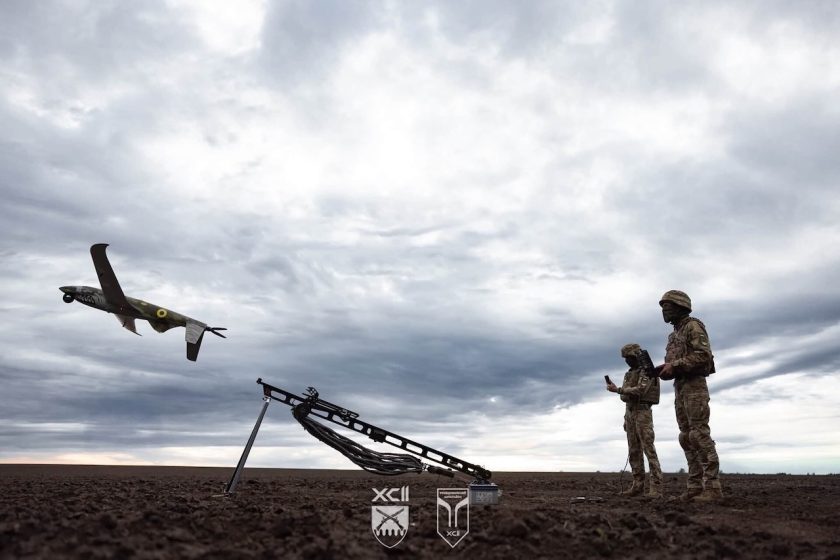
Perhaps the defining military development of this conflict has been Ukraine’s rapid integration of unmanned systems.
Drones now perform reconnaissance, artillery spotting, logistics support, and precision-attack missions across virtually every level of the battlefield. First-person-view drones have dramatically increased battlefield lethality while reducing Ukraine’s dependence upon more expensive conventional munitions.
Beyond the front line, Ukraine’s expanding long-range strike campaign has become increasingly significant. Ukrainian forces have repeatedly targeted Russian military airfields, ammunition depots, rail infrastructure and energy facilities located hundreds of kilometres inside Russian territory.
These attacks are not intended to achieve immediate battlefield victory. Rather, they seek to impose cumulative costs upon Russia’s military-industrial base, complicate logistics, stretch Russian air defences and gradually erode the Kremlin’s ability to sustain a prolonged war.
Russia's War Economy Under Pressure
Ukraine’s strategic strike campaign is beginning to generate measurable economic effects.
Russian crude oil production has reportedly declined to approximately 8.7 million barrels per day—around five per cent lower than the same period last year and roughly ten per cent below production targets. Repeated attacks against refineries and fuel infrastructure have disrupted domestic fuel distribution, increased repair costs and forced Russia to invest additional resources in protecting critical infrastructure.
Russia’s economy is not facing imminent collapse. Energy exports continue to generate significant revenue, while Moscow has demonstrated considerable resilience in adapting to sanctions and wartime production.
Nevertheless, Ukraine’s strategy is steadily increasing the cost of sustaining Russian military operations. Equally important, long-range strikes are bringing the war onto Russian territory, undermining the perception that the conflict can remain distant from everyday Russian life.
Attrition and Mobilisation
Russian casualties continue to represent one of the Kremlin’s most significant strategic challenges.
Although precise figures remain contested, there is broad agreement among Western defence analysts that Russian losses remain exceptionally high relative to territorial gains achieved. Sustaining this level of attrition over an extended period inevitably places pressure upon recruitment, training and force generation.
Should casualty rates continue, Moscow may eventually face another mobilisation decision. Such a move would carry political risks, particularly if recruitment increasingly affects residents of Moscow and St Petersburg, populations that have largely been insulated from the war compared with poorer regions of the Russian Federation.
Ukraine also confronts serious manpower constraints. As the smaller nation, maintaining force generation while sustaining the civilian economy remains an ongoing challenge. However, higher morale, superior command structures, more effective training and rapid technological adaptation have allowed Ukraine to offset some of its demographic disadvantages.
THE SCEPTICAL CASE
Russia retains substantial advantages in manpower, industrial capacity and military production.
The Kremlin continues to demonstrate its willingness to absorb heavy casualties while maintaining wartime economic mobilisation. Should Western political support weaken significantly or Ukraine experience declining manpower, Russia may still calculate that time ultimately favours Moscow.
Likewise, continued missile and drone attacks against Ukrainian cities and infrastructure impose high economic and psychological costs on Ukrainian society.
From this perspective, Russia may still believe that strategic patience will eventually produce political fatigue within Ukraine and among its international partners.
THE OPTIMISTIC CASE
Ukraine’s strengths lie less in numbers than in adaptation.
Its military has consistently demonstrated an ability to innovate more rapidly than its larger adversary, integrating drones, electronic warfare, intelligence and decentralised command into a highly adaptive fighting force.
Meanwhile, European military assistance continues to expand as European governments increasingly recognise that Ukraine’s security is closely linked to the continent’s future security. Although the United States remains an indispensable provider of intelligence and select advanced military capabilities, Europe is assuming an increasingly prominent role in sustaining Ukraine’s defence.
Should Russia continue to suffer high casualties, face increasing economic pressure, and see growing domestic dissatisfaction, the long-term sustainability of Putin’s current strategy may become increasingly uncertain.
IMPLICATIONS FOR AUSTRALIA
Australia remains geographically distant from the conflict but cannot remain strategically indifferent.
The war continues to reshape the global security environment, accelerating defence spending, transforming military doctrine and demonstrating the growing importance of autonomous systems, electronic warfare and resilient supply chains.
The conflict also reinforces broader lessons for Australia’s own defence planning. Modern warfare increasingly rewards innovation, industrial resilience and rapid adaptation over numerical superiority alone. The extensive use of drones, long-range precision strike and distributed command structures offers important insights for future Australian force development.
Finally, the conflict highlights the strategic importance of maintaining close defence relationships with both Europe and the Indo-Pacific while strengthening Australia’s own sovereign defence industrial capacity.
THE SAGE ASSESSMENT
The war in Ukraine is no longer simply a contest over territory. It has evolved into a competition between two very different strategic models.
Russia continues to rely upon mass mobilisation, industrial production and sustained attritional warfare in the expectation that time will ultimately exhaust Ukrainian resistance and Western political support.
Ukraine, by contrast, seeks to offset its demographic disadvantages through technological innovation, superior leadership, higher morale and increasingly effective long-range strikes against Russia’s military-industrial base.
Neither side appears close to achieving decisive victory.
However, the strategic trajectory appears to be shifting. Ukraine’s ability to impose growing economic costs on Russia while denying Moscow meaningful operational breakthroughs suggests that Russia’s long-term position may gradually become more difficult despite its continuing military strength.
For President Putin, the central challenge is no longer simply defeating Ukraine. It is sustaining domestic political support, economic resilience and military effectiveness during what has become Europe’s longest major conventional war since 1945.
The coming year is therefore likely to be determined less by dramatic battlefield offensives than by which side proves more capable of sustaining a prolonged war of national endurance.
Disclaimer
SAGE Strategic Intelligence Briefs are produced independently and are intended to support informed discussion of geopolitical, defence, security and economic developments. Assessments reflect information available at the time of publication and may change as new information emerges.
About SAGE International Australia
SAGE International Australia is an independent strategic research and analysis organisation specialising in geopolitics, defence, national security, economic resilience and strategic foresight.
Through objective, evidence-based and non-partisan analysis, SAGE helps decision-makers understand risk, identify opportunity and prepare for future challenges.
For more information, visit: